

It's no use, I still have to comment about the £125 billion Tropical Forest Forever Facility (TFFF) initiated by Brazilian President Lula. The intention is as follows, which I describe in the article „The professionals have their say“ about the programme ARD Germany Trend – „How important is climate change to people in Germany?“ as described:
"President Lula announces a 125 billion forest protection fund, the proceeds of which will be used to ‚compensate‘ nations that preserve primary forests (rainforests, primeval forests). not Deforest. Forests must be seen as an economic factor and included in GDP. Nice idea, but unfortunately only 5 billion has been raised, which I find somewhat indicative of international climate protection efforts.„1 The professionals have their say 🌐 https://paddys.de/die-profis-haben-das-wort/
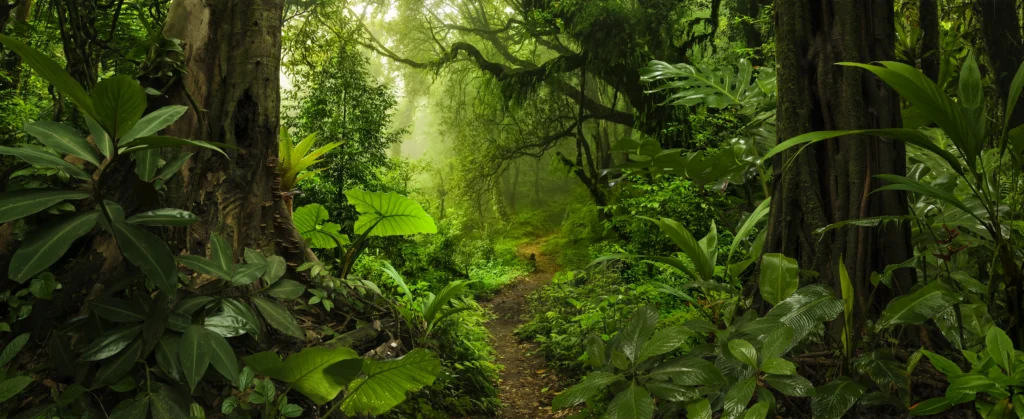
When I hear something like that, the numbers start rattling around in my head. The idea is that the more primary and natural forest we destroy, the more likely extreme weather damage becomes – including, quite specifically, on your doorstep.2 IPCC AR6: Climate Change 2021 – The Physical Science Basis 🌐https://www.ipcc.ch/report/ar6/wg1/ At the end of the day, it's always about money.
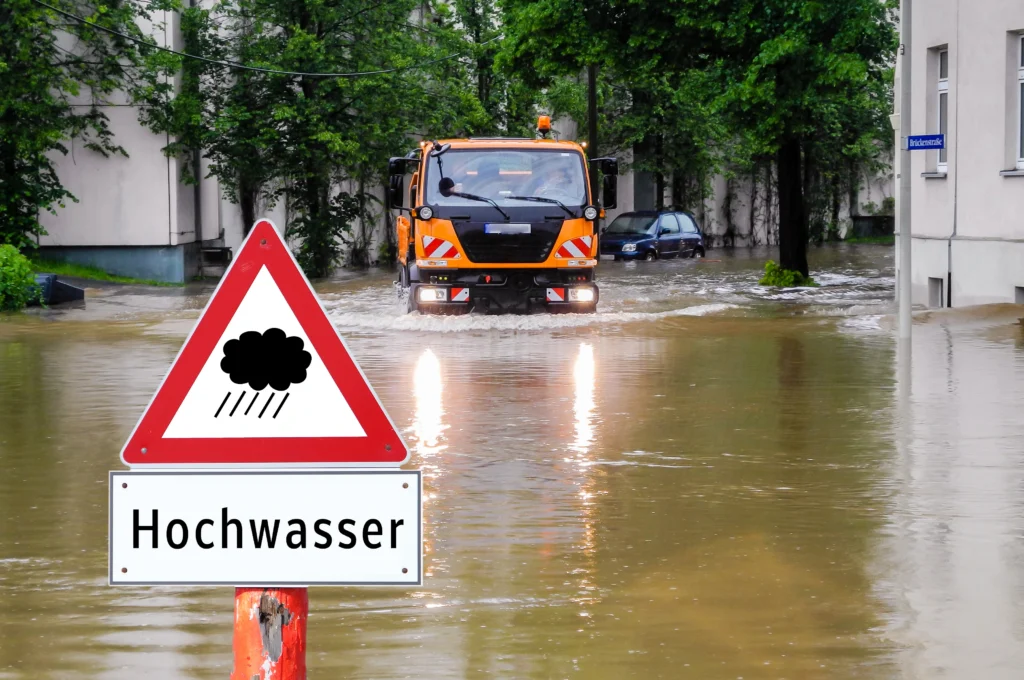
Let's just take the Flood disaster in the Ahr Valley in July 2021: For me, the real cost is first and foremost 136 lives lost in the Ahr Valley alone, and a total of around 190 fatalities by the flood – the deadliest flood disaster in Germany in decades.3 NHESS (2025): Causes of the exceptionally high number of fatalities in the Ahr valley flood of 2021 🌐https://nhess.copernicus.org/articles/25/581/2025/ The situation is different for the insurance industry: the German Insurance Association estimates insured losses at around €8.5 billion, while experts estimate total economic losses and public reconstruction costs at over €30 billion.4 GDV (2022): 2022 natural hazards balance – The devastating floods in July 2021 alone caused damage of EUR 8.5 billion 🌐https://www.gdv.de/gdv-en/media/2022-natural-hazards-balance-at-eur-4-3-billion-an-average-claims-year-for-insurers-123850 5 Infras (2025): Extreme Weather in Germany – Understanding the Costs (Ahr Valley: ~€8.5 billion insured, ~€30 billion reconstruction programmes) 🌐 https://www.infras.ch/en/projects/extrem-weather-costs-climate-damage-register/
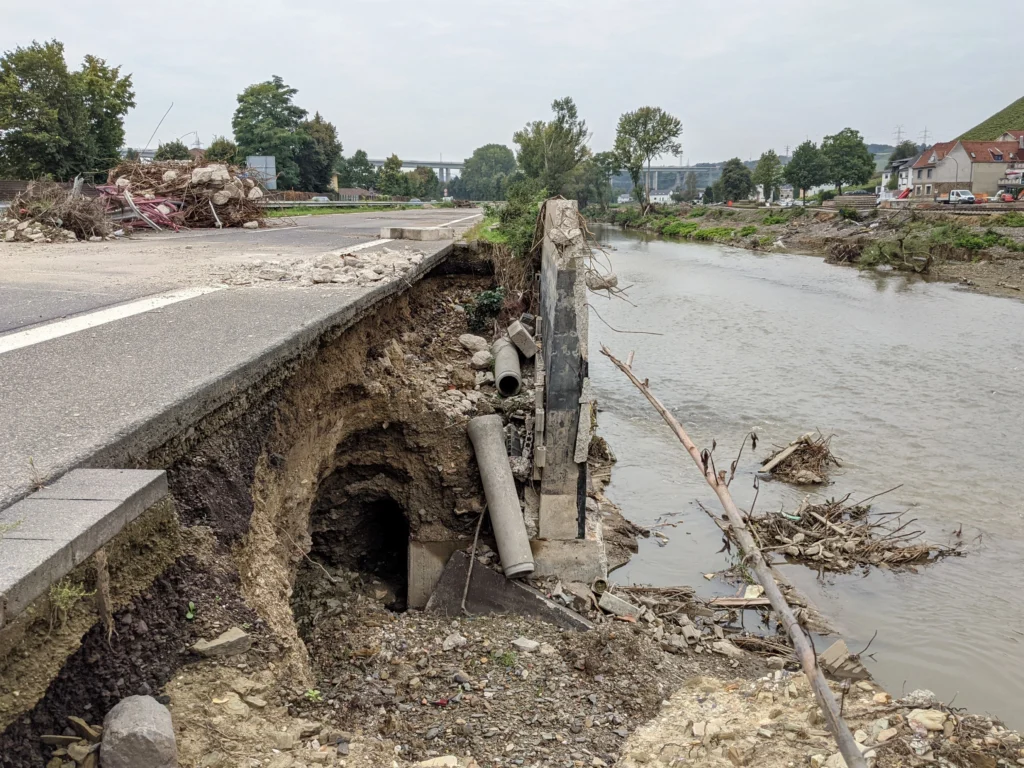
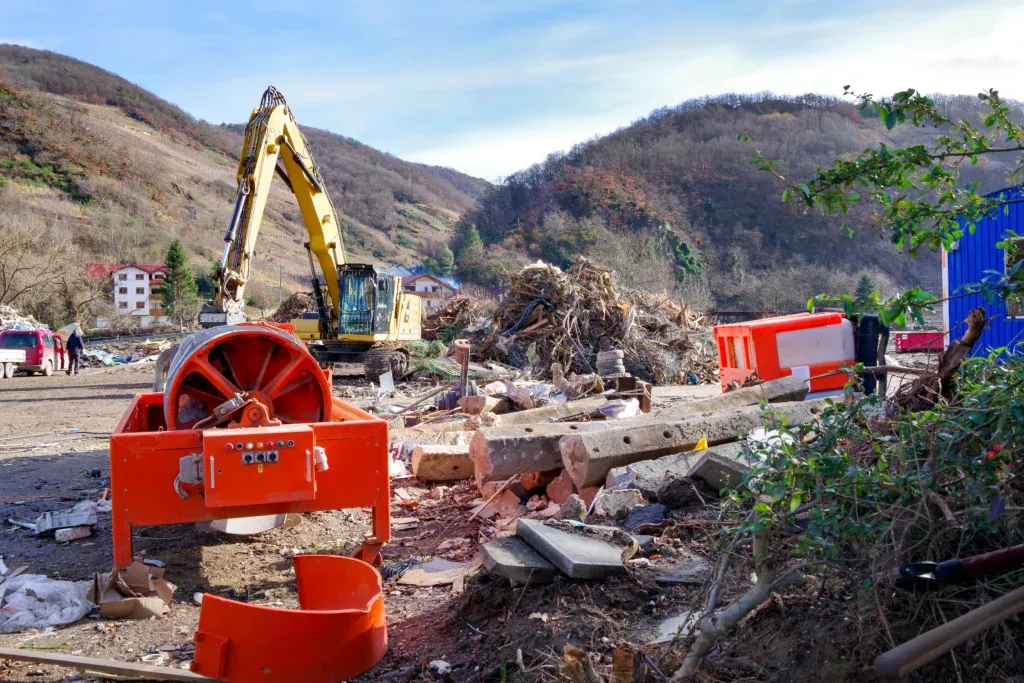
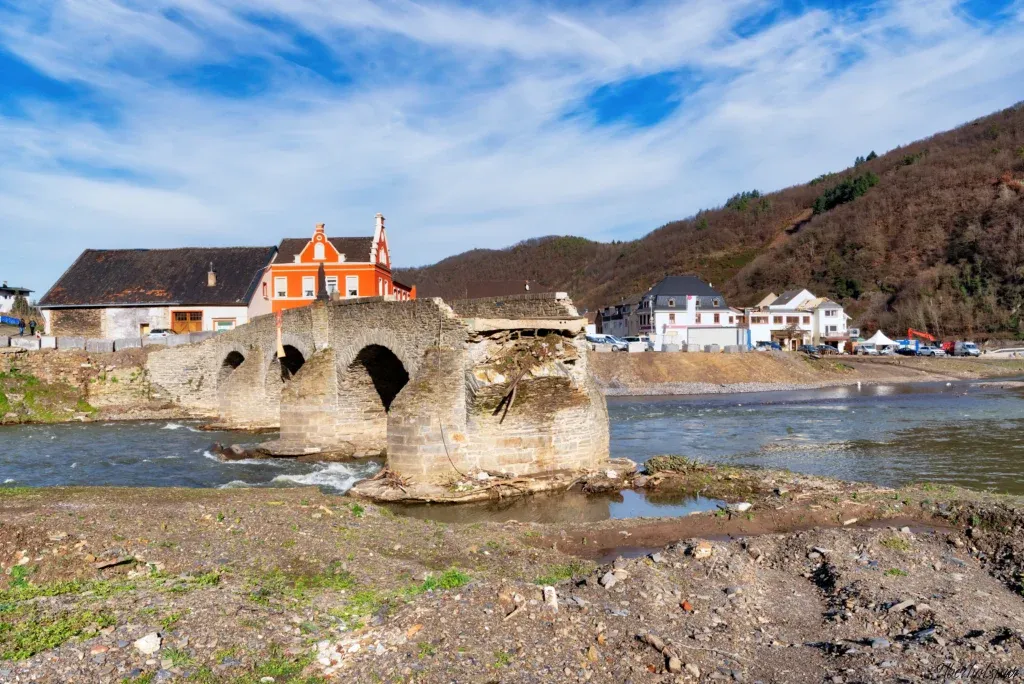
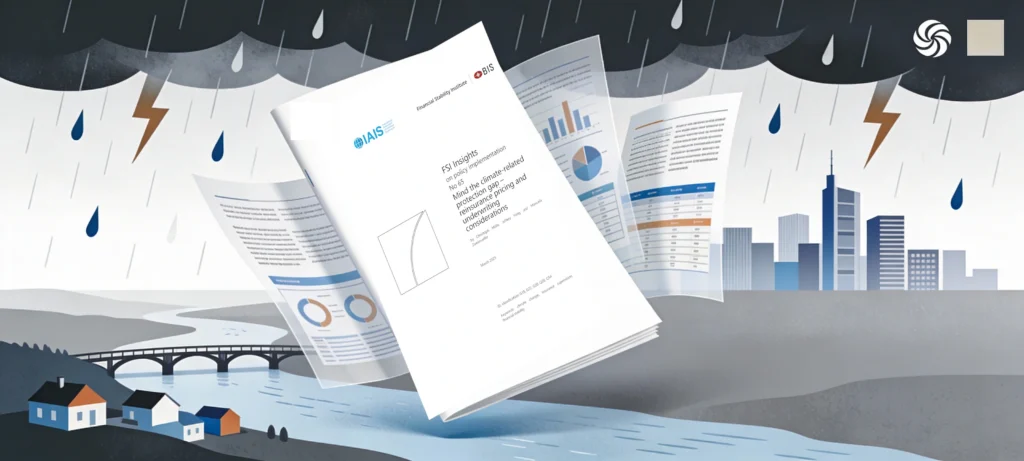
Reinsurers and supervisory authorities are now issuing very clear warnings that extreme weather risks are increasing with global warming – and that certain regions and risks will simply no longer be insurable on reasonable terms at some point in the future.16 BaFin (2024): Natural catastrophes – The risks are on the rise 🌐 https://www.bafin.de/SharedDocs/Veroeffentlichungen/EN/Fachartikel/2024/fa_bj_2405_Naturkatastrophen_Das_Risiko_steigt_en.html 17 Swiss Re / BIS (2023): Mind the climate-related protection gap – reinsurance pricing and underwriting considerations 🌐https://www.bis.org/fsi/publ/insights65.pdf Translated, this means that the bill for every hectare of forest cleared, for every additional tenth of a degree of warming, will ultimately be paid not by „others“ but by you – as a taxpayer, as an insurance policyholder and as a person who lives in the wrong valley when the next heavy rain system gets stuck.18 Munich Re (2025): Economic impact of weather disasters 🌐https://www.munichre.com/en/insights/natural-disaster-and-climate-change/weather-disasters-in-industrialized-countries.html
Let's first look at how the few remaining primary forests are distributed across the planet. According to the FAO, there are around 1.11 billion hectares of primary forest worldwide, and three countries – Brazil, Canada and Russia – together account for over 60 per cent of this.19 FAO: Global Forest Resources Assessment 2020 – Key Findings 🌐 https://openknowledge.fao.org/server/api/core/bitstreams/9f24d451-2e56-4ae2-8a4a-1bc511f5e60e/content The rest is spread across a handful of other large forested countries such as the Democratic Republic of Congo, Indonesia and Peru.20 Statista: Distribution of forest area worldwide in 2021, by country 🌐https://www.statista.com/statistics/238916/primary-forest-distribution-worldwide/

Find more statistics at Statista
Illustration: Statista: Distribution of forest area worldwide in 2021, by country. Editorial use. Courtesy of Statista 15 December 202521 Statista: Distribution of forest area worldwide in 2021, by country 🌐 https://www.statista.com/statistics/238916/primary-forest-distribution-worldwide/
The idea behind our Forest Protection Fund is deliberately simple: countries receive a Share of the annual fund return proportional to their share of global primary forest cover – but only if they actually protect these forests. If a country with 2 per cent of global primary forest consistently maintains zero deforestation, it receives 2 per cent of the „return pot“. If it starts clearing forests, we deduct a penalty.
Peru as a concrete example
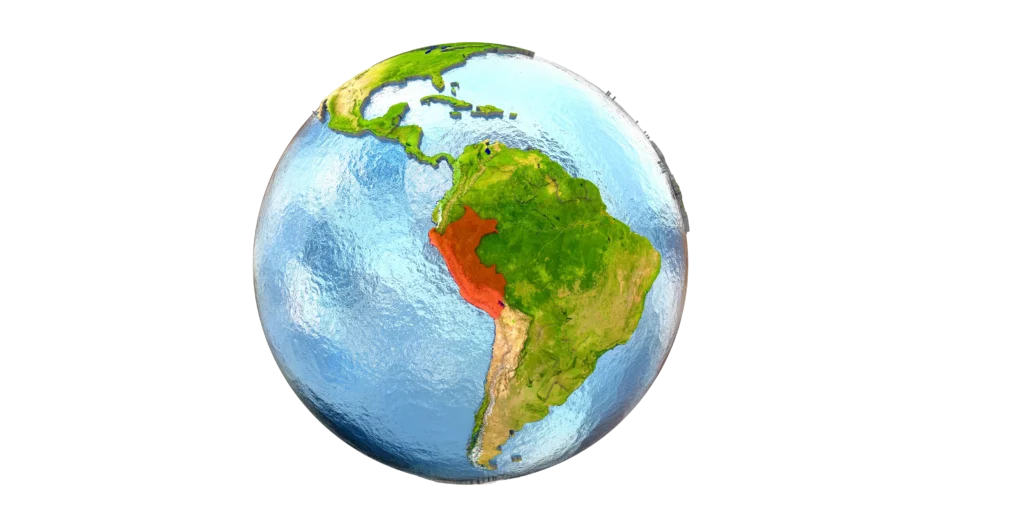
Peru is one of the largest forested countries in the world: the current estimate for the country's primary Amazon rainforest is around 67 million hectares, compared to around 73 million hectares in the past.22 MAAP #93: Shrinking Primary Forests of the Peruvian Amazon 🌐 https://www.maapprogram.org/shrinking_primary/ This means that Peru has lost around 6.1 million hectares of original Amazon rainforest to date – approximately 8 per cent of its original primary forest area, with a good third of this having disappeared since 2001.23 MAAP #93: Shrinking Primary Forests of the Peruvian Amazon 🌐 https://www.maapprogram.org/shrinking_primary/ 24 OECD (2025): Deforestation in Peru – Key facts and main drivers 🌐 https://www.oecd.org/content/dam/oecd/en/publications/reports/2025/10/deforestation-in-peru_cd7c064a/e7786877-en.pdf In percentage terms, this sounds manageable, but in reality it amounts to 6.1 billion square metres of rainforest – gone forever.
Taking the global primary forest areas from FAO and MAAP as a rough reference framework, Peru accounts for a maximum of around 5 per cent of the tropical Primary forests worldwide and approximately 10 per cent of the entire Amazon rainforest.25 MAAP #93: Shrinking Primary Forests of the Peruvian Amazon 🌐https://www.maapprogram.org/shrinking_primary/ 26 WWF: The Amazon Rainforest – share by country 🌐https://www.wwf.org.uk/where-we-work/amazon This is precisely why Peru is central to any serious forest conservation strategy – not as the last remaining green space, but as a global heavyweight.
Wilderness International and „genuine“ protection
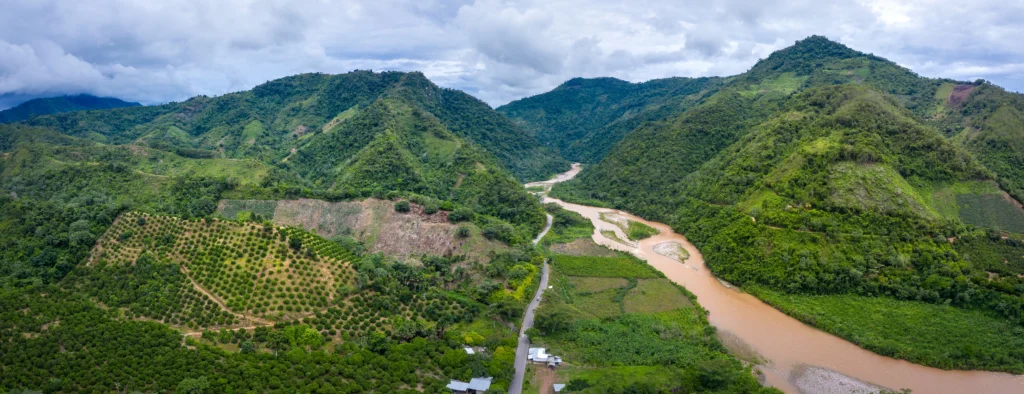
This is precisely where Wilderness International comes in: the organisation purchases specifically demarcated areas of rainforest in Peru, secures them legally and, together with local partners, protects them permanently from deforestation and exploitation.27 Wilderness International: Conservation projects in the Peruvian Amazon rainforest 🌐https://www.wilderness-international.org/projekte/peru/ Unlike many abstract „compensation projects“, this is not about hypothetical CO₂ certificates, but about specific forest plots that you can see on a map – and which will then not be cleared.
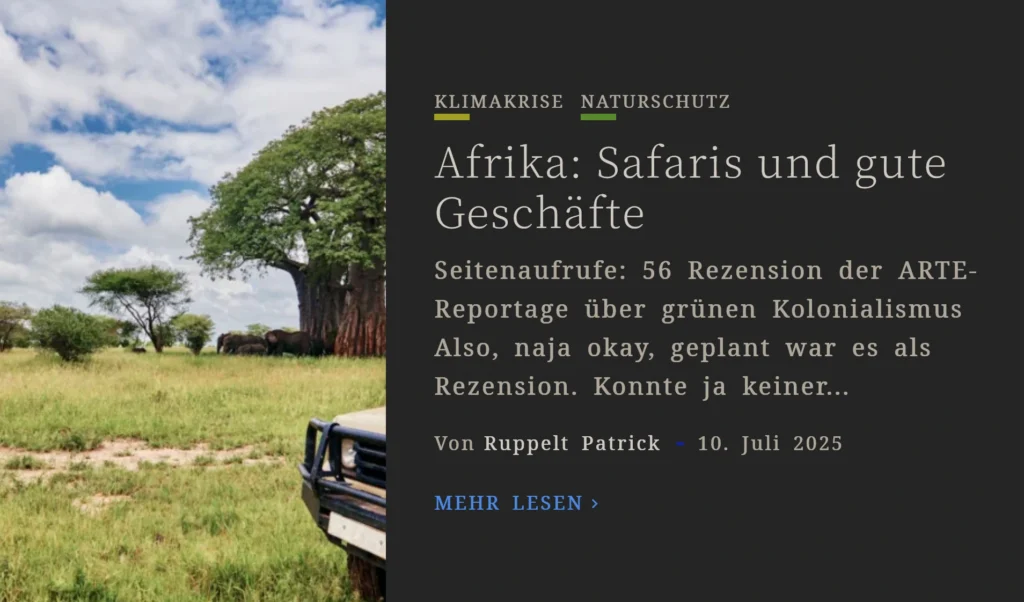
A small editorial note at this point: On the subject of dubious CO₂ certificates, I have, for example, in the article Africa: safaris and good business Written. Definitely a personal recommendation.
If we apply our fund idea to this, countries such as Peru could receive a proportional share of the annual fund return for every hectare of rainforest that is reliably protected. Due to historical deforestation, we would conservatively deduct, say, 10 per cent as a penalty – Peru would then receive not five but 4.5 per cent of the return pot. To be fair, even that does little to change the fundamental problem, as a glance at the figures shows.
Sample calculation: Peru vs. Ahr Valley
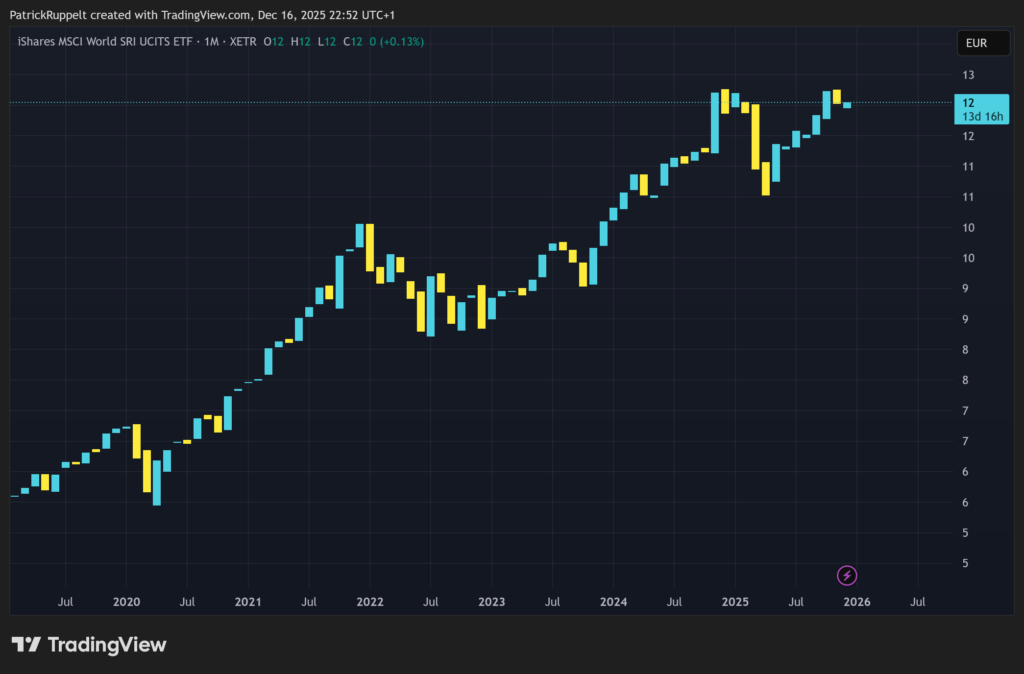
Let's take Lula's „forest protection fund“ with a volume of 125 billion US dollars, invested like a global sustainable equity fund. Studies of thousands of funds and the MSCI World SRI Index suggest a long-term return of roughly 6 to 10 per cent p.a.; for the calculation, we will optimistically assume 9 per cent.28 Performance of sustainable funds – evaluation of 11,000 funds and MSCI World SRI 🌐https://greenfinanceguru.com/blog/2024/05/07/performance-of-sustainable-investments/ 29 MSCI World SRI Index – Long-term return performance 🌐https://www.msci.com/documents/10199/486d87c0-6979-42c3-9d75-53fb018b7fe7
If the fund generates a 9 per cent return, that amounts to 11.25 billion US dollars per year. Assuming that half of this return (50 per cent) is distributed as a „forest protection premium“, US$5.625 billion remains in the pot. Peru would receive – in very simplified terms – around 5 per cent for its share of the tropical primary forests, minus a 10 per cent penalty = 4.5 per cent of the distribution.
At an exchange rate of around 0.85 euros per dollar, that would amount to roughly:
• £5.625 billion × 0.045 ≈ £0.253 billion
• 0.253 billion USD × 0.85 ≈ 0.21 billion euros for Peru per year.
Even if we take a much more optimistic view in my original thinking (100 per cent distribution without the creation of reserves, higher Peru share, different penalty, slightly different parameters) and end up with around €0.4 billion, the shock of the magnitude remains the same: the flood disaster in the Ahr Valley caused over €30 billion in public reconstruction aid and economic damage in Germany alone.31 Infras (2025): Extreme Weather in Germany – Understanding the Costs (Ahr Valley: ~€8.5 billion insured, >€30 billion total) 🌐https://www.infras.ch/en/projects/extrem-weather-costs-climate-damage-register/ In the best-case scenario, Peru would receive a few hundred million euros per year under the same global system – for preserving an ecosystem without which the climate crisis would escalate dramatically for everyone.
And Tuvalu?
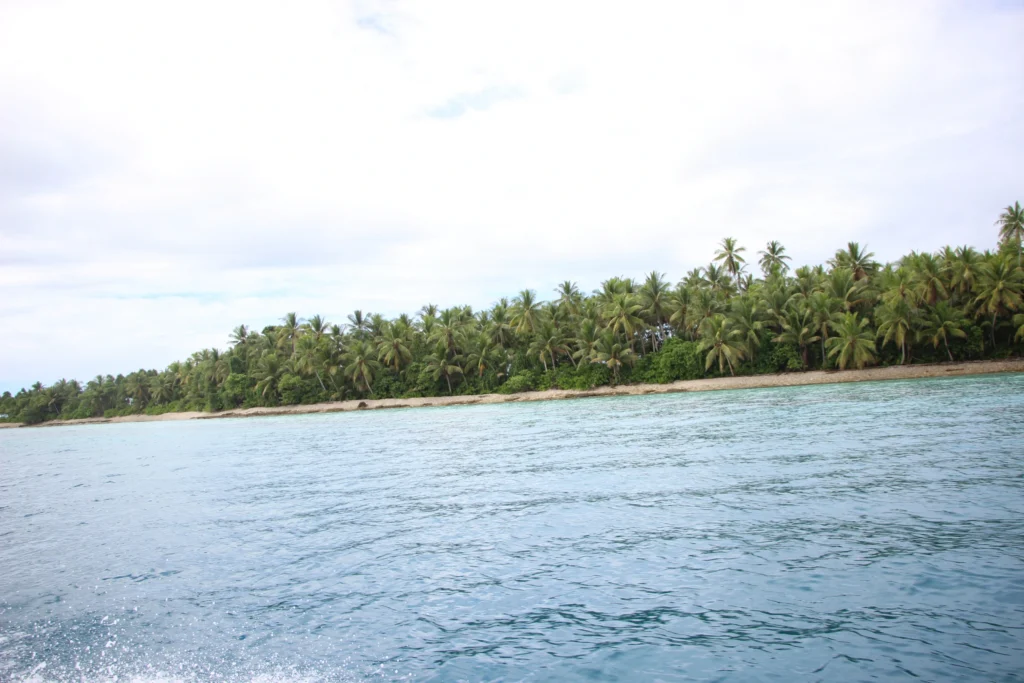
What can a country like Tuvalu say – a country that has contributed the least to climate change and is feeling its effects the most? Tuvalu has around 1,000 hectares of forest, which is 0.000025 per cent of the world's total forest area.32 Worldometer: Tuvalu's share of world forests 🌐 https://www.worldometers.info/food-agriculture/tuvalu-food-agriculture/ 33 FAO: Global Forest Resources Assessment – Forests cover just over 4 billion hectares worldwide 🌐 https://www.fao.org/forest-resources-assessment/2020/en/ In our model, that would be a share of the return pot that literally amounts to a few euro cents per capita – while at the same time entire islands are disappearing below sea level, storm surges are washing away villages and drinking water wells are becoming salinated.34 Tuvalu Forest Information – FAO data on forest area and vulnerability 🌐 https://tuvalu-data.sprep.org/resource/tuvalu-forest-information-and-data
You can see where this is going: even an ambitious forest protection fund worth tens of billions with optimistic return assumptions seems more like a consolation prize in view of the real damage caused by climate change. It becomes even more absurd when you consider that the actual global rainforest fund pledged after the COP only amounts to a good £5–7 billion in contributions – a fraction of what the £125 billion example fund would achieve.38 Reports on new commitments to the Amazon Fund, including commitments worth billions and global forest protection funding gaps 🌐https://www.reuters.com/sustainability/climate-energy/amazon-fund-rainforest-received-640-mln-new-pledges-2023-2024-02-01/ 39 Analysis of Lula's global rainforest fund (Tropical Forest Forever Fund) and the approximately £6.7 billion in pledges made so far 🌐https://earth.org/will-a-new-fund-fill-the-gap-left-by-cop30s-failure-on-tropical-forest-protection/
The point remains: the global North willingly invests in „sustainable“ funds with expected returns of 6–10 per cent, but when it comes to compensating those who bear the real climate damage and are literally saving our last rainforest, we are talking about fractions of a per cent of global financial assets. This is precisely why we need organisations like Wilderness International – and people who are not satisfied with a few billion pounds serving as a fig leaf for an escalating climate crisis.40 Wilderness International: Protection of primary forests in Peru and other regions 🌐 https://www.wilderness-international.org/