

Are you tired of watching pointless TikTok videos that you won't remember tomorrow? But a book is too exhausting for you and you don't want to put your mobile phone down? Then I have something for you. I read a lot, watch one lecture after another whenever I get the chance. I left my mega good Series 9 TV to my parents. I don't watch linear television and can't stand advertising. That's why I prefer to watch a lot of really interesting stuff. After all, I have a lot of time and a lot of interest in pretty much everything there is to discover on this amazing planet we call Earth. Who came up with this stupid name? Take a look at our Earth from above1https://earth.google.com/web/@2.1041504,-140.13945802,-5491.18531359a,22257243.39694977d,35y,0h,0t,0r. What is the first name that pops into your head?
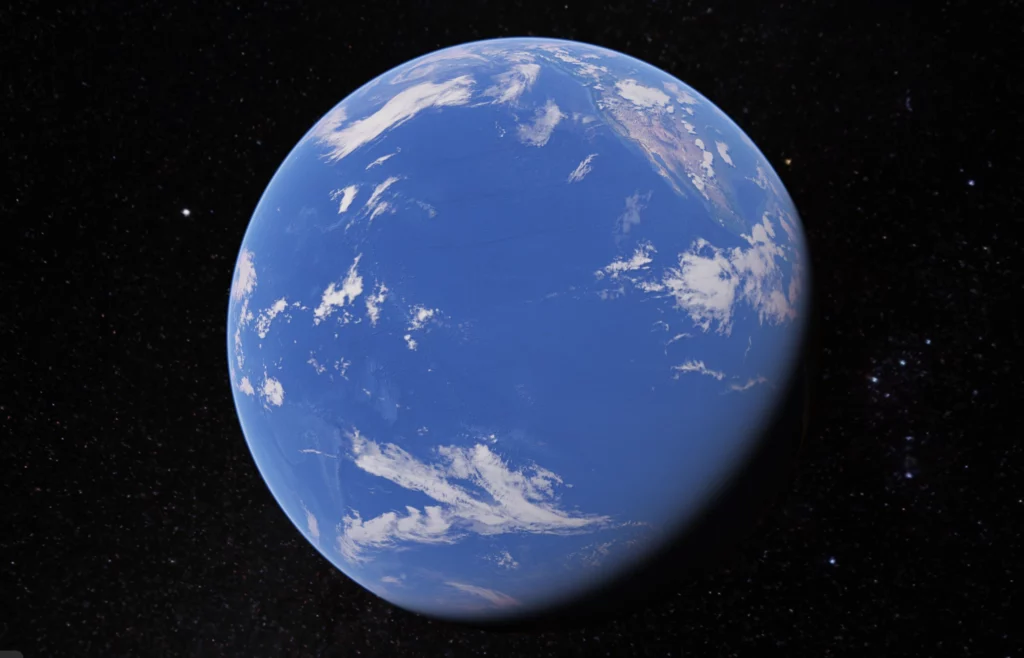
„Water“ would be more appropriate. People always say „the blue plant“ as a matter of course. But are we even outlining the sheer amount of water we have? When was the last time you held a globe in your hand? I found it fascinating even as a child. Sure, today we have Google Earth. That also has its own special charm. But it can't replace a real globe.
Did you know that the idea behind „Earth“ didn't come from Google but was stolen by two Berlin hackers? Long before Google started working on it, prototypes of the original product were on display at trade fairs. But nobody believed in the feasibility or the idea. It was only when the creators came up with an ingenious fake software that things suddenly started to heat up. It still wasn't feasible, but they spied on the invited guests, asked them supposedly private questions, e.g. about where they lived as a child, and played prepared videos of the „approach“ that would later make Google Earth so famous.
That's the least of what I had in mind when I started writing today. It just came to me and who knows, maybe it would be a reason to use my Netflix account again after years of inactivity. They filmed the story in a mini-series once. For me, it belongs more to the entertainment category, but that can be quite nice for a change.
Video tip: „The Billion Dollar Code“ on Netflix
There. Now that I've got rid of that, we can deal with it ourselves.
With Google Earth, I mean. Copyright or not, you can see some pretty cool things there. And no, I'm not thinking of ways to track down the mansion of the top models like the guys from Big Bang Theory do.
No, I recently discovered a time-lapse feature that allows you to see how the sea ice of the Arctic and Antarctic has changed since I was born'(do you find here). When I clicked on start time-lapse for the first time, to be honest, I'm lost for words. Don't get me wrong. I imagined it would be worse. There's more ice in the Arctic winter than in summer, and overall you have to say it's getting less, of course. But is it as dramatic as the climate alarmists would have us believe? But then I see the small scale bar at the bottom of the picture. Okay. So if this bar is 3,000 kilometres... Holy shit! An area of the whole of Germany has just disappeared. Just like that. Gone. Goodbye and never again. We have arrived in the 21st century. Now it's all happening in quick succession. Here another area like Switzerland is gone, Italy is saying goodbye and there's not much left of Austria either. Well, first impressions can be deceptive. If you just look at the seventies, eighties and even the nineties, you could say that we're going to have a problem at some point. But what has happened in the last twenty years, there is only one logical realisation: shit, we have a problem.
On the left you see how it looked 25 years ago, on the right it is shown five years ago:
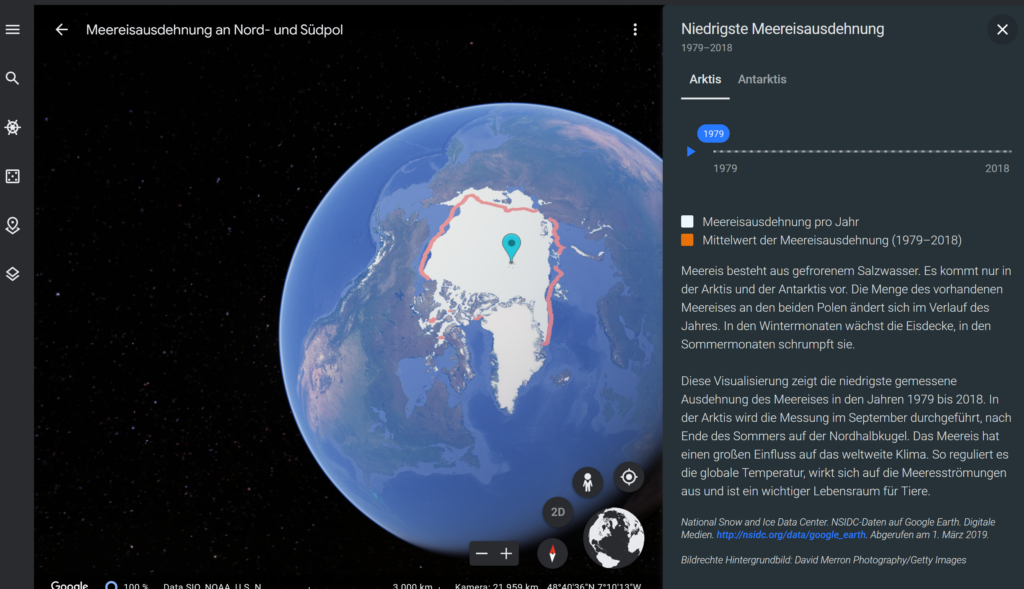
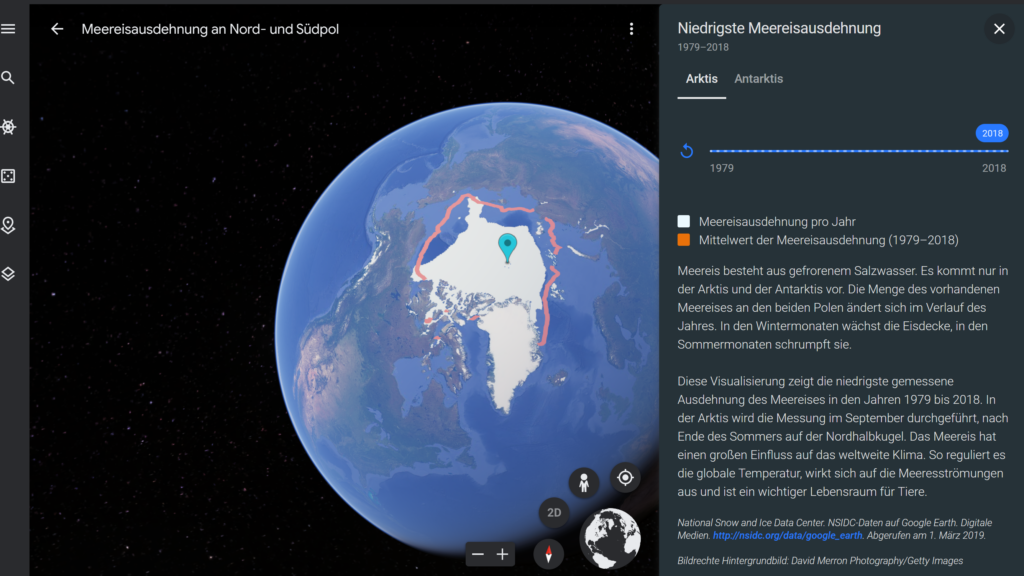
Unfortunately, Google Earth does not have any more recent images of the Poles than in 2018. But let's put it in perspective. The ice at the North Pole is many millions of years old.2https://www.wwf.de/themen-projekte/projektregionen/arktis/arktis-ohne-eis. And in just twenty years we manage to melt an impenetrable ice continent into practically the next great sea lane that connects Europe with Asia by a direct route. It is hardly surprising that no economic power is seriously interested in preserving the Arctic with its countless habitats.
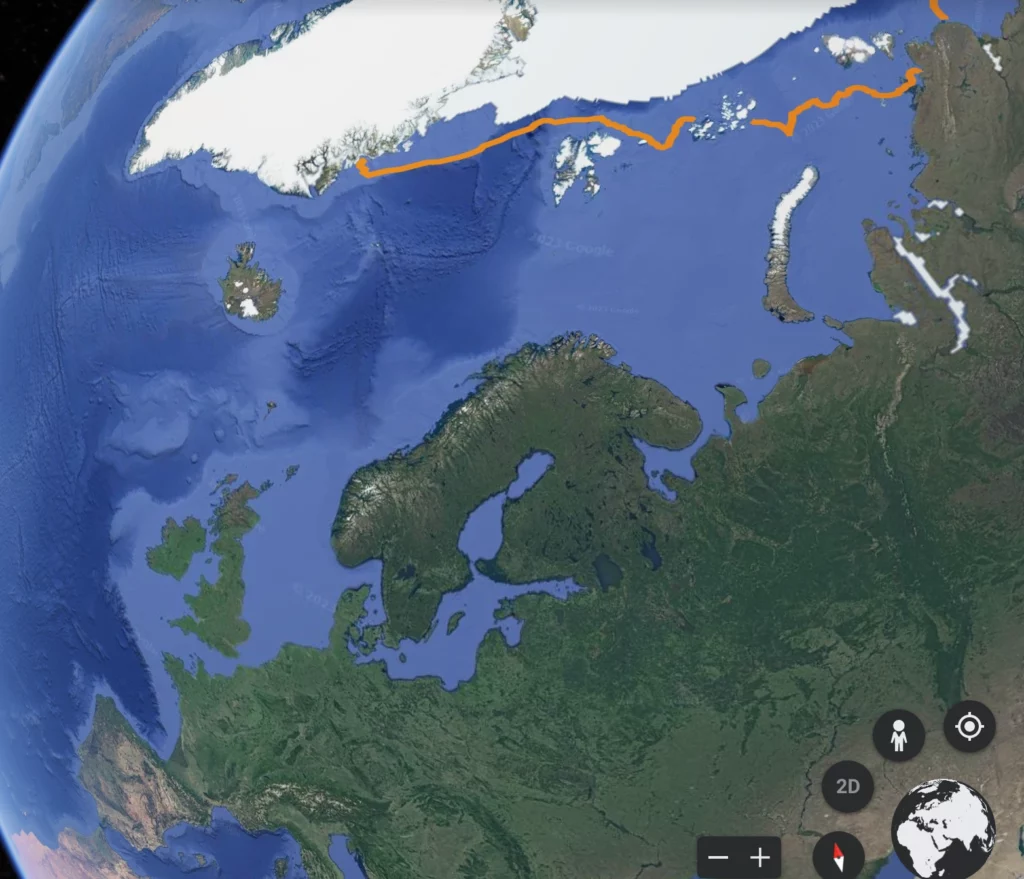
If you want to watch the time-lapse and change the perspective yourself, you can use the here do. The scale is difficult to make tangible only with words. You can zoom in on Europe, for example. Maybe you'll discover the one place whose size you can estimate for comparison. It's hard to imagine where there was artistic ice twenty years ago (orange line as mean value):
Now I want to know exactly. How has the ice changed, what does it look like today? What is the difference between „old“ ice, which is four years old and older (thick, cold, opaque, good for the global climate and regulating the temperature of the world's oceans) and young ice, which forms anew every winter (thin, unstable, translucent, rather average for the global climate)?.
I found answers to this question in an animation by NASA. It's worth a look (Link here).
Small spoiler: You can't tell the difference on the Google Earth satellite images. Everything looks the same from above. In the animation, „good“ ice, which we absolutely need, is shown in white and the „young“ ice, most of which will not survive the summer, in grey:
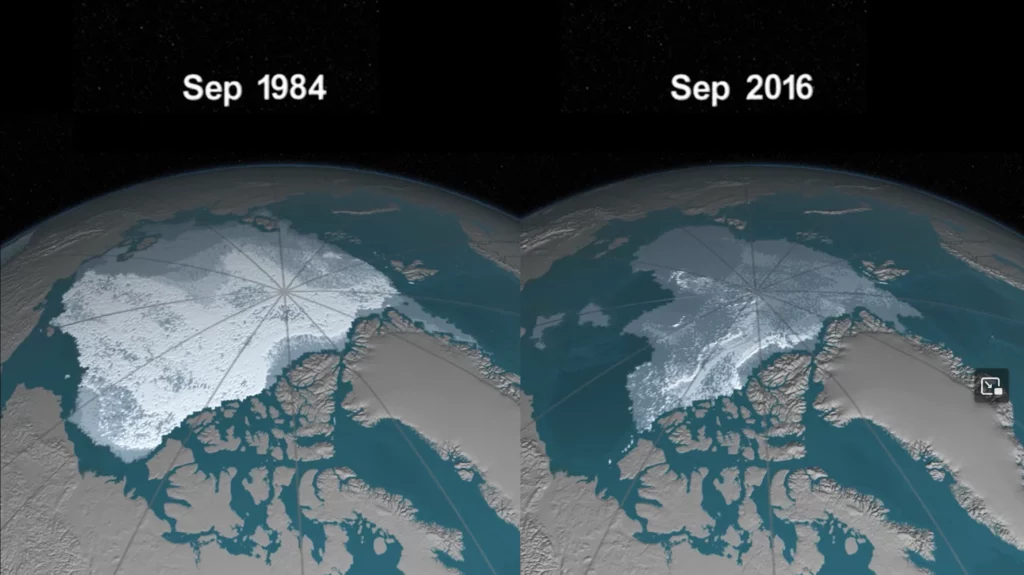
You really don't have to have studied geology to realise that this is shit. A blind man with a cane can see that.
What effects this in turn has, also on us directly, is summarised by ark Benecke in this exciting lecture. here).
s is an update to the original presentation he gave in the European Parliament last year (to see here). There's even a newer one, but it's recorded extremely quietly and therefore unfortunately a bit tiring to watch - but still mega interesting (do you think here). The bottom line: German, European and informational climate targets are for shit. Net zero by 2050? Bullshit. By then, Hamburg and Bremen will have sunk into the sea.
Ironically, you don't have to live on the coast, quite the opposite. Cities like Chicago, for example, are already flooding because of global warming. Not in the sea, but in the ground. The term „global warming“ can be understood literally here.
A fairly recent study with 150 underground measuring stations shows that the temperature of the ground under urbanised areas is a full ten degrees higher than, for example, underneath Chicago's urban park. As a result, the ground practically collapses in on itself. The resulting damage to infrastructure and real estate is already clearly visible. We have actually been seeing this for a long time, but so far we have not connected it with the climate crisis. You can find the video here, the somewhat more detailed article here.
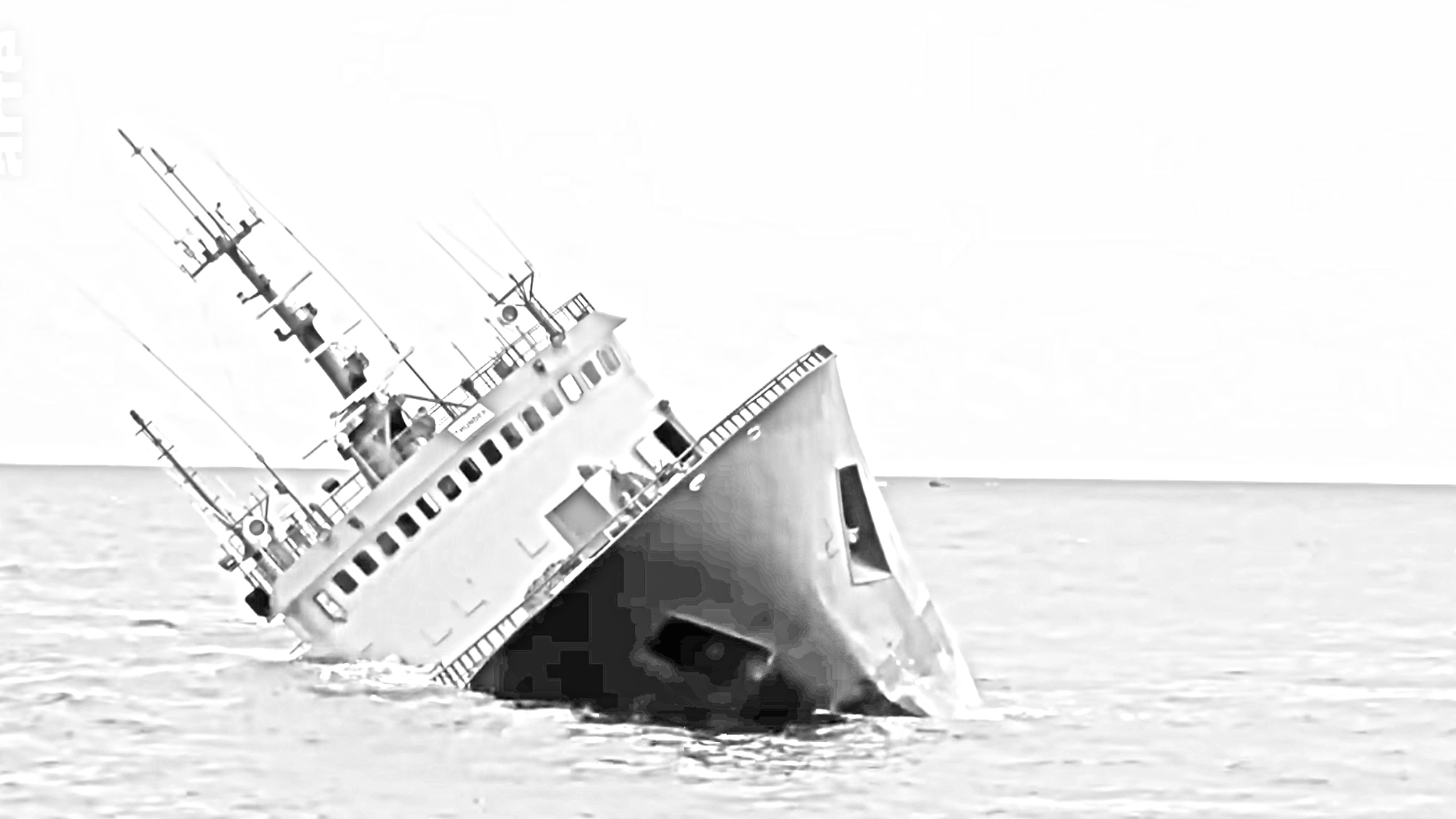
I would like to round off my watchlist with a really good arte documentary. Let's take a look at the southern side of our planet, the Antarctic. Here we accompany the Bob Barker and the Sam Simon on what I think is one of the most exciting chases of an illegal fishing fleet. The two Sea Shepherd ships show in a week-long chase what it means to really be active for our environment.
Reality is simply more exciting than any action film. To see here.